
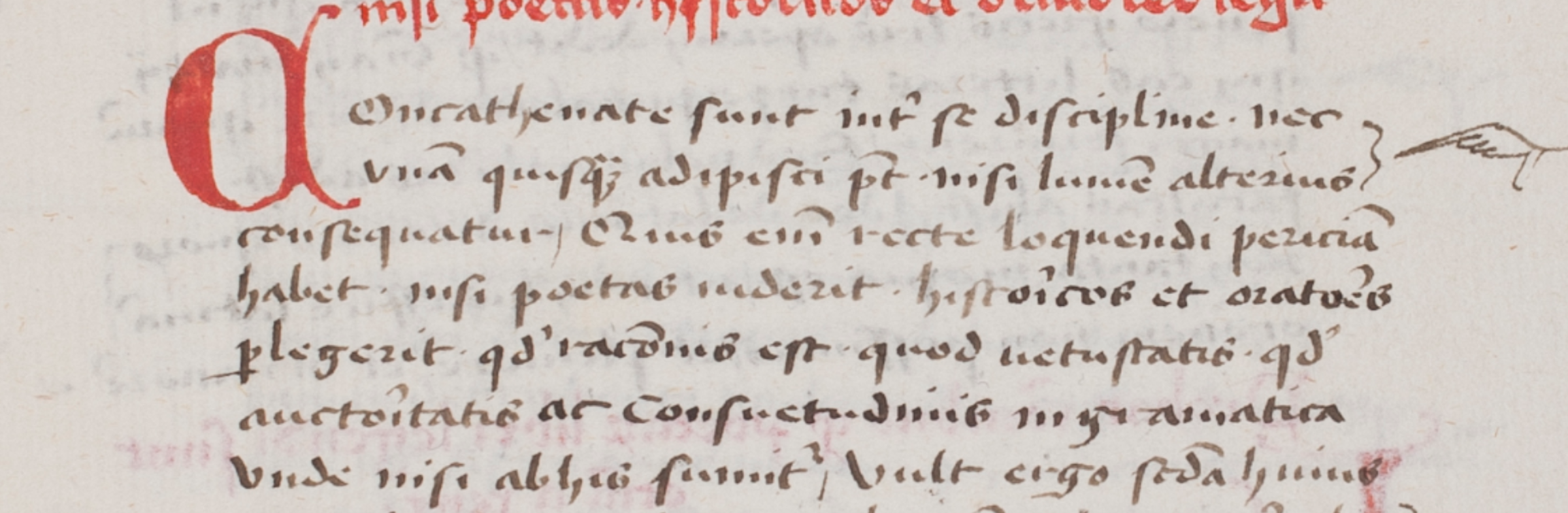
© Österreich, Melk, Benediktinerstift, Cod. 1799, fol. 27r
- Language:
- Latin
- Place of origin:
- Austria, Benedictine monastery Melk
- Time of origin:
- Date of the manuscript shown: third quarter of the 15th century; Date of the work (De liberorum educatione by Eneas Silvius Piccolomini): 1450
- Transcription:
- Quis enim recte loquendi peritiam
habet, nisi poetas uiderit, historicos et oratores
perlegerit? Quod rationis est, quod vetustatis,
quod auctoritatis ac consuetudinis, in grammatica
unde nisi ab his sumitur? - Translation:
- Who, after all, has any experience in speaking properly unless they have at least glanced at the poets and thoroughly read the historians and orators? Where else would we derive what is considered in grammar to be reasonable, time-honored, accepted, and common usage, if not from them?
- Contact person:
- Sebastian Gassmann
- Related project:
- Ancient authorities in new political and social contexts
Additional Information:
In 1450, Eneas Silvius Piccolomini (later Pope Pius
II) completed his Letter on Education addressed to the barely ten-year-old
Bohemian-Hungarian King Ladislaus. It contains a detailed humanist educational programme that deals not only with the training of children in general, but above all with the education befitting a royal child. Alongside a wide range of topics, Piccolomini places particular emphasis on linguistic education: a king who cannot read and write properly, he argues, is merely a crowned donkey.
The passage shown here discusses the importance of reading authoritative authors, particularly those from antiquity, for a proper education in Latin grammar
Click here to get back to game!